
Quick Facts
How many growth stages does paddy rice have?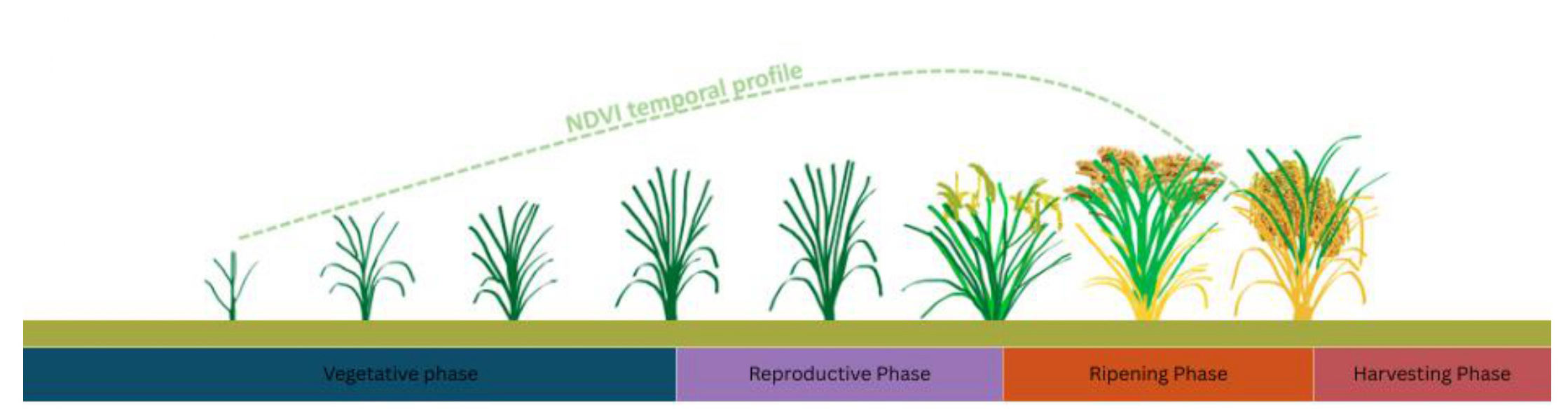
Paddy rice goes through four main growth stages before it is ready for harvest. It begins with the vegetative stage, where the plant develops roots, stems, and leaves. This is followed by the reproductive stage, during which the rice plant forms panicles and flowers that will later produce grains.
Next comes the ripening stage, where the grains fill, harden, and turn golden. Finally, the rice reaches the harvesting stage, when the grains have matured and are ready to be collected. Each stage directly affects the final yield, grain quality, and cooking performance of the rice.
Paddy rice goes through four main growth stages before it is ready for harvest. It begins with the vegetative stage, where the plant develops roots, stems, and leaves. This is followed by the reproductive stage, during which the rice plant forms panicles and flowers that will later produce grains.
Next comes the ripening stage, where the grains fill, harden, and turn golden. Finally, the rice reaches the harvesting stage, when the grains have matured and are ready to be collected. Each stage directly affects the final yield, grain quality, and cooking performance of the rice.
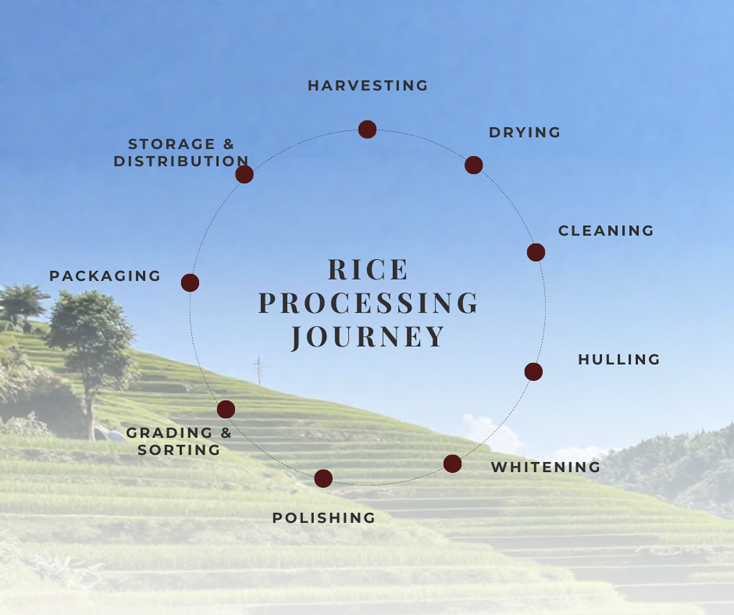
The Rice Processing Journey
Every grain of rice goes through a precise journey — from the paddy field, through careful milling, to ensure quality, consistency, and freshness.
What is rice bran?
Rice bran is the outer layer removed during whitening. It’s rich in nutrients like vitamins, minerals, and healthy oils. It’s often used in animal feed, health supplements, or rice bran oil.
What is rice husk?
The husk is the protective outer shell of paddy removed during hulling. It’s not edible but is used as fuel, fertilizer, or building material
How is rice harvested?
Rice is ready for harvest when the grains are fully mature, firm, and golden yellow. At this stage, the grains have reached their maximum size, moisture content is ideal, and the starch inside is fully developed.
Harvesting at the right time is crucial because:
Harvesting at the right time is crucial because:
- Maximizes yield – Immature grains are lighter and may shrink, reducing total weight.
- Reduces breakage – Overripe or very soft grains are more likely to crack or break during milling.
- Preserves quality – Timely harvesting ensures the rice tastes better and cooks evenly.
 How can i help you?
